

All are welcome to join the 2025 Elakha Alliance Science Symposium presented virtually on Monday October 27th, 9:00am-3:00pm PST. Registration is required to attend the live presentations and to ask the speakers questions.
Our focus this year are the “Restoring Balance: Sea Otter Conservation Lessons & Updates.” We’ve chosen the theme to coincide with the release of the newly published Sea Otter Conservation II: Nearshore Ecosystem Restoration.
Driven nearly to extinction by the maritime fur trade, sea otters have made one of conservation’s most remarkable comebacks. This new volume brings together leading experts to share the latest insights into their recovery and the profound role they play in restoring and strengthening coastal ecosystems.
From kelp forests and eelgrass meadows to salt marshes and sandy shorelines, sea otters influence the health of nearshore habitats in ways that ripple across marine and even terrestrial systems. The book also explores the history and socio-ecological consequences of the fur trade, the challenges and opportunities of future reintroductions, and the latest research on climate change, genetics, and population dynamics.
At this year’s symposium, you’ll hear directly from the scientists and researchers who contributed to this landmark publication. Scroll down for the full schedule.
We are asking participants to provide a $10 registration fee/donation, which will help the Elakha Alliance continue our work towards ocean conservation in Oregon. If you’re a student looking to attend and the registration fee is a hinderance, please email Info@ElakhaAlliance.org for sponsorship opportunities.
VIEW RECORDED PRESENTATIONS FROM 2025 HERE
____________
Symposium Presenter Schedule:
Updated 10/26: Heather Coletti who was scheduled to present at 1:00pm is unable to because of the federal government shutdown. We will now conclude the event at 3pm.
- 9:00am PST: KEYNOTE: How the history of harvest and recovery influenced our understanding of the ecological role of sea otters, Jim Bodkin
- 10:00am PST: Sea otters and rocky reef communities, Dr. Matt Edwards
- 11:00am PST: The role of sea otters in seagrass and salt marsh communities, Dr. Erin Foster
- 12:00pm PST: A catastrophic and unintended experiment: Revisiting our understanding of sea otters and their social and ecological importance based on a system in transition, Dr. Shawn Larson
- 1:00pm PST: Reintroductions and restoring nearshore ecosystems-the Elakha Alliance: A new approach to sea otter conservation, Bob Bailey
- 2:00pm PST: Envisioning sea otter recovery in the 21st century, Dr. Shawn Larson
____________
2025 PRESENTER BIOS
Bob Bailey

Bob spent nearly 40 years in coastal and ocean planning and management for the State of Oregon. He also served as a City Commissioner for the City of Oregon City, a member of the City of Salem Budget Committee, and chair of the Oregon Wave Energy Trust. He is currently the Board President of the Elakha Alliance.
Jim (James) Bodkin

James Bodkin is Scientist Emeritus with the US Geological Survey. Jim received a MSc degree from California Polytechnic State University, San Luis Obispo in 1986. He led the sea otter and nearshore ecosystem research program for the USGS, Alaska Science Center until his retirement in 2013 and continues to consult with government, private and academic organizations regarding sea otters and coastal marine ecosystems. Jim has 47 years of experience with sea otters and marine ecosystems and co-edited Volume I of Sea Otter Conservation.
Heather Coletti (Unable to present because of the federal government shutdown)

Heather is a Marine Ecologist for the National Park Service. She is monitoring resources that are explicitly linked to the marine nearshore along regions within the Gulf of Alaska through the NPS SWAN I&M program and Gulf Watch Alaska.
Dr. Matt Edwards
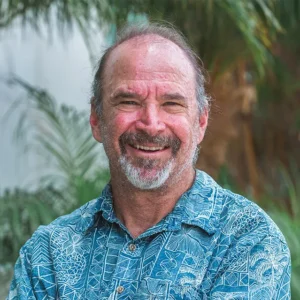
Dr. Matt Edwards is interested in the causes and consequences of variability in biological communities. His research focuses on patterns of variation in giant kelp (Macrocystis pyrifera) forests at multiple spatial and temporal scales throughout the species’ geographic range in the Northeast Pacific Ocean. As part of his research program, he’s been examining the relative importance of numerous physical and biological factors in the structuring of kelp forest communities, as well as how these factors modify interactions among co-occurring species, with particular emphasis on large-scale phenomena (such as El Niño Southern Oscillations and global climate change).
Dr. Erin Foster
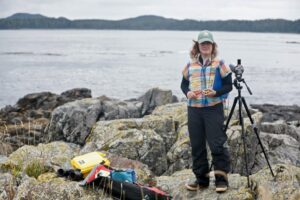
Dr. Erin Foster is a postdoctoral Research Scientist with the Cetacean Research Program at Fisheries and Oceans Canada’s Pacific Biological Station. Erin received a PhD from the University of Victoria, examining the effects of sea otter range expansion, their influence on eelgrass population genetics and community ecology, and the ancient relationships between sea otters, clams, and Indigenous clam gardening. Erin has 17 years of experience with sea otters and nearshore ecology and is interested in restoring the ecological interactions that have been lost or modified where keystone species are reduced.
Dr. Shawn Larson
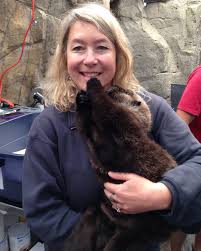
Dr. Shawn Larson received her Ph.D. from the University of Washington School of Aquatic and Fishery Science. Shawn is the Senior Conservation Research Manager at the Seattle Aquarium. She has been working with sea otters for 28 years focusing on sea otter reproduction, population genetics, diet characteristics, nearshore ecology, and most recently the sea otter’s role in mitigating climate change. Dr. Larson has organized and run the Sea Otter Conservation Workshop in Seattle since 1999, serves as the Sea Otter Species Coordinator for the International Union for the Conservation of Nature’s Species Survival Commission’s Otter Specialist Group and co-edited Volume 1 of Sea Otter Conservation.